This post shows that you can make mistakes and recover and end up with a very sound, very happy horse.
The mare is working hard, on a very low sugar, high forage diet and over the summer successfully completes two novice endurance competitions.
In the last post the first three pictures showed a really tiny Western Pleasure QH foot (as well as others).
This is a hind foot from the same horse as it 'arrived' April '08 - you can still see the nail holes from when the shoes were pulled the previous Autumn(ish)./div>

An injured sacro illiac, some dodgy trimming, too much sugar and an abcess later the front foot looks like this in August '08.


Then because of circumstances other than feet, the mare spent much of the summer stabled, being exercised 3 times a day and her feet started to heal. In the picture below you can see new concavity spreading out from the centre of the foot. The outer rim of sole is still pancake flat at this stage.


Unfortunately it is possible to make the same mistake over and over again. In the Autumn the mare turns out again which is much better for her socially. There is a struggle with grass management and quite inadvertantly a high sugar product is added to her feed.

Slightly bull nosed, stress rings and bruising are signs that all is not well.

An injured sacro illiac, some dodgy trimming, too much sugar and an abcess later the front foot looks like this in August '08.

The sole is on the point of bulging (now why didn't the farrier or the vet point this out?) There is flare, there is virtually no depth of collateral groove (so no depth of sole) and the wall is really thin. When the foot was cleaned you could also see blood in the white line. But I was very inexperienced at documenting things then so didn't know enough to clean the foot before taking the photo!
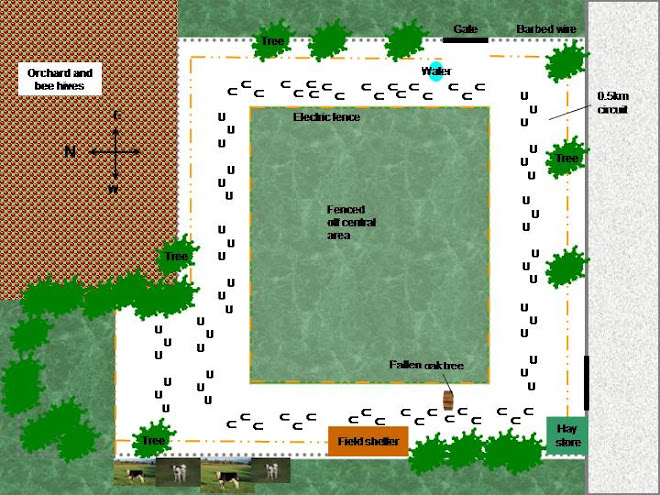
After 12 weeks of box rest for the sacro injury the horse is still lame. So we move her to a mini PP track and within two weeks she goes sound and shortly after that she is rideable.
Feet are still terrible though and being trimmed in ski tip fashion. See Dec '08 below.

The mare spends a month completely off grass and on gravel instead and has one 'proper' barefoot trim. Jan' 09 left below.

Back on grass PP track. The improvement in concavity continues - you can see the sole getting ready to flake and the back of the foot is looking better. But if you look at the heel bulbs (2nd picture) you can see some odd marks/damage. This was little abcesses blowing out of the back of the heel. It went on for some time and then just stopped.


Then we had a foreseeable disaster; which we only saw with hindsight! The grass grew (bad bad grass), the sole splatted and the mare got horribly bruised.

Then because of circumstances other than feet, the mare spent much of the summer stabled, being exercised 3 times a day and her feet started to heal. In the picture below you can see new concavity spreading out from the centre of the foot. The outer rim of sole is still pancake flat at this stage.

At this stage the mare is working hard, on a very low sugar, high forage diet and over the summer successfully completes two novice endurance competitions.
The left hand picture is of a freshly trimmed foot. You can see the thick wall, tight white line and the wear in the heel area. This foot is on the way!
In the right hand picture you can see here how the sole is naturally exfoliating and exposing new concavity. There is a dirty great hole in her frog where an abcess blew out. You can also see how much thicker the hoof walls is, even with a big roll.


Unfortunately it is possible to make the same mistake over and over again. In the Autumn the mare turns out again which is much better for her socially. There is a struggle with grass management and quite inadvertantly a high sugar product is added to her feed.
Once again the feet splat and she bruises her soles. You think we'd get the message by now :-) This mare can't handle sugar.

The results are felt not just in her feet, which lose concavity again, but also in temperament - the mare looks sad and tired even though she is not working so hard.
Her owner though is both fantastic and dedicated. The source of sugar is found and eliminated. The feet start to improve again.


But as the nights draw in and with a saddle problem the amount of exercise is cut drastically.
Now, I often hear how people are worried they will wear their horses feet to the bone. Well actually, if you manage your horse well the problem is actually the reverse. This horse's feet have been stimulated to the extent that they grow so fast the owner can't wear them out fast enough. And then when the exercise reduces you can get the problem as seen in the next picture.
This foot looks like it's trying to emulate the 'tin cans' I worked on in the States. Just because it's gone short of some wear. The sole is in reasonable nick, although the heels are getting long.


We trim the foot and as it adjusts to less wear the growth slows. By the next trim, we have lost the tin can effect, but the heels are on their way to the moon. The horse has developed thrush and the foot is starting to contract again.


You can see the stress rings from the sugar the mare had in the Autumn. The wall is really thick and I've put on a fat roll to enable her to break over properly without suffering mechanical leverage on the flare.
The owner has strict instructions to work the horse much harder, on a variety of surfaces, where ever she is comfortable. I know the owner has the dedication to put in the work.
But there is the rub - unless you are keeping your horse on a PP track with a variety of surfaces it takes a lot of exercise to give the horse hoof the stimulation it needs. Most people don't actually ride enough :-) So far from restricting the amount of exercise you can give your horse, you will probably need to give it more.
You will also need to manage your horse's diet and environment really carefully, with attention to detail and a consistant approach.
A few people have horses or conditions that make it really easy. But that kind of luck is as rare as hen's teeth in the UK.
As you can see from this video - the mare is very sound on gravel and if you can slo mo it you will see she has a solid heel first landing.


 Posts
Posts